Superpower Ragdoll Physics Doctor, X-Ray Flash & Graves
How Superpower Ragdoll Physics sells impact—and how to use those cues to learn powers without wrecking scenarios.
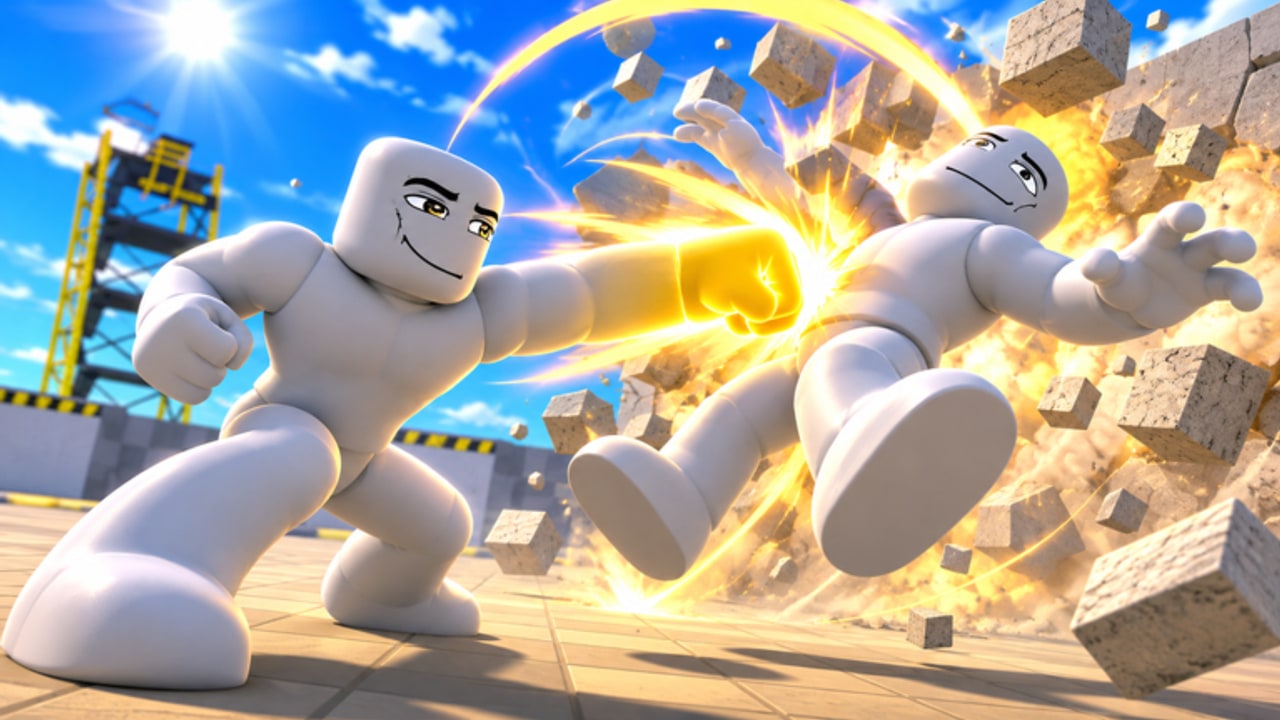
Every person in Superpower Ragdoll Physics is a real physics body. The fantasy is not only knockback—it is readable aftermath. Land a big hit and the world answers with an x-ray flash, a doctor running in with bandages, and sometimes a grave for the ones who did not make it. This guide explains how to treat those presentation beats as a training system: learn power impact, know when to reset experiments, practice in the white room, stay careful in scenarios, and keep world-event chaos readable for your four-player party.
Nothing here invents hidden damage formulas or fake medical minigames. We stick to the official fantasy SuperheroCCU advertises and to habits that make the sandbox teach you faster. Cross-link Getting Started, Powers, Tips & Tricks, Scenarios, World Events, and Maps as you go.
The three-beat injury language
1. X-ray flash — “that connected hard”
The x-ray flash is the instant readability layer. When a committed launch, clap, beam finish, or splash lands with authority, the flash sells the hit before the body even finishes tumbling. Use it as a binary tutor:
- Flash appeared — you crossed from shove into spectacle.
- No flash — you grazed, mistimed, or hit with a tool that was never meant to finish the beat.
In co-op, call x-ray once when you are teaching a friend. It trains the whole lobby to watch the same feedback instead of only watching ragdoll distance.
2. Doctor with bandages — “stabilize the scene”
The doctor arrival is the comedy-and-consequence beat. Bandages mean the sandbox still wants to acknowledge injury, not silently despawn a prop. Practical reads:
- A doctor scramble after your hit means the impact was socially “loud” even if the map still looks intact.
- If doctors keep spawning on the same sidewalk, you are farming the same contact style—great for practice, bad for hostage lanes.
- Do not treat the doctor as a competitive revive mechanic to optimize; treat them as a pacing flag that says “reset or relocate.”
3. Graves — “that one did not make it”
Graves mark the end of a personal physics story. They are punchlines and warnings. In freeplay, graves tell you which tools are fight-enders on that map. In scenarios, graves near an objective are a red flag that your punctuation tools are eating the mission fantasy.
Using feedback to learn power impact
Build a deliberate contact ladder before you chase clips:
- Glancing hits — tip a body without full ragdoll; usually no heavy presentation chain.
- Committed launches — street-crossing throws and swings that often earn the x-ray flash.
- Finishing spikes — nukes, meteors, stacked clap-plus-tornado beats that pull doctors and graves into the scene.
Map the ladder onto headline tools from the 36-power roster:
| Tool | Typical feedback lesson |
|---|---|
| Laser eyes | Teaches precision; flash appears when you track a finish, not when you spray |
| Telekinesis | Teaches staging; graves appear when you throw into lethal height or traffic fantasy |
| Thunder clap | Teaches short-range tempo; watch for multi-body flashes in clusters |
| Web swing | Teaches mobility aftermath—your landing can injure as much as your grab |
| Time stop | Teaches setup; the flash often belongs to the follow-up, not the freeze |
| Tornado | Teaches herd relocation; doctors may spawn where the parade stops |
| Giant mode | Teaches collision scale; footsteps and shoulders become presentation events |
| Meteor / nuke | Teaches punctuation; expect full chain if anyone was in the blast story |
Compare preferences later on the powers tier list and Beginner Loadouts, but learn feel here first.
When to reset the experiment
Reset when feedback stops teaching:
- You can no longer see who caused which flash.
- Doctors overlap so hard the sidewalk is unreadable.
- A grave yard grows on the objective marker.
- A villain (Brute, Pyro, Speedster, or another of the six) plus your own ultimates create a noise floor.
- A world event rewrites the lighting and you cannot tell splash from sky hazard.
Soft reset options: walk to a new block, swap to the clean white room, or call white room reset in party chat per the Co-op Guide. Hard reset: leave and rejoin only if the server state is truly cooked.
White-room practice plan (10–15 minutes)
The clean white room is the injury laboratory:
- Two minutes laser tracking—count flashes vs misses.
- Two minutes telekinesis throws into soft landings vs lethal arcs.
- Two minutes thunder clap spacing so friends are outside the pulse.
- Two minutes swing landings without clipping teammates.
- Two minutes one agreed meteor or nuke with a verbal countdown—watch doctor and grave timing together.
- Remaining time: mix time stop setups into the same hits so you learn which beat owns the flash.
Bring phone and VR friends into this room first; comfort and aim differ by device (Mobile & VR, Platforms, Controls).
Scenario caution — do not “finish” hostages
Scenarios borrow the same injury language under objective pressure. Hostage rescue is the clearest example: a spectacular x-ray on the wrong body is a failed fantasy even if the clip looks great. Rules of thumb:
- Precision player owns the hostage zone; burst player waits outside.
- If a doctor is already running the objective sidewalk, stop splash immediately.
- Graves on the rescue marker mean you should soft reset the attempt, not double down.
- Bank heist and lab escape interiors punish the same way—telekinesis relocates problems; nukes erase the room you still need.
Outbreak and frontline tolerate more finishing spikes, but still assign who is allowed to punctuate. Prison break yards are safer for clap and tornado than for unannounced meteors near the extraction fantasy. Full objective notes: Scenarios.
World-event chaos and readability
Fifteen events—including T-Rex rampage, shark rain, tsunami, airstrike, bee swarm, giant dummy, and disco party—compete with your injury presentation for screen space.
- During sky events, delay personal artillery so you can still tell meteor flash from airstrike noise.
- During swarm or flood events, move first; study doctor spawns after the hazard relocates.
- During disco / dummy party modes, lean into spectacle, but keep one sober navigator watching whether graves are eating a live scenario.
- After the event, re-center on a landmark before you resume impact drills.
Readable chaos is a team skill: short callouts, one camera owner for clips, and respect for VR comfort when shake stacks with nuke presentation.
Co-op teaching loop
- Demonstrate a glancing hit and a finishing spike side by side.
- Ask teammates what they saw (flash? doctor? grave?).
- Swap roles so the observer becomes the launcher.
- Only then load a scenario or chase villains.
This loop beats silent button mashing and scales to new players joining your 4-player lobby after the experience’s rapid post-launch growth.
Related pages
- Tips & Tricks · Getting Started
- Powers · Maps · Co-op
- Scenarios · World Events
- Mobile & VR · Updates
Master the doctor, the x-ray, and the grave, and every other system on this wiki gets easier—because you can finally see what your powers are saying.
Frequently Asked Questions
Quick answers to the most common questions.
What does the x-ray flash mean?
It is the instant readability cue that a hit crossed from a shove into a spectacular impact. Use it to judge whether your power connected the way you intended.
Why does a doctor run in with bandages?
The doctor is part of the official injury presentation. Treat the scramble as a pacing flag that the scene got loud, not as a ranked revive minigame.
When do graves appear?
Graves mark characters who did not make it after heavy physics outcomes. In freeplay they teach which tools finish fights; in scenarios they warn you that objectives are being erased.
Where should I practice reading these cues?
Start in the clean white room, then move to playground or city blocks. Reset when overlapping doctors and events make feedback unreadable.
Should I use Nuke during hostage rescue?
Usually not until the hostage lane is clear. Precision and control tools keep the objective fantasy intact; save punctuation tools for after the save.